
You've decided to cook for your cat. You've made the first batch. And now you're standing there watching them sniff it, turn around, and walk away.
Here's the good news. Most cats don't reject homemade food because something is wrong with it. They reject how fast you switched it. Cats are wired to be suspicious of anything new, especially when it smells and feels like nothing they've eaten before. The fix is simple. Slow down.
Most cats need about 10 days to make the switch. Some need a few weeks. Both timelines are completely normal, and neither one means you did it wrong.
The 10-day ladder
The idea is to give your cat's gut and instincts time to adjust together. Each step adds a little more homemade food while the familiar food keeps things anchored.
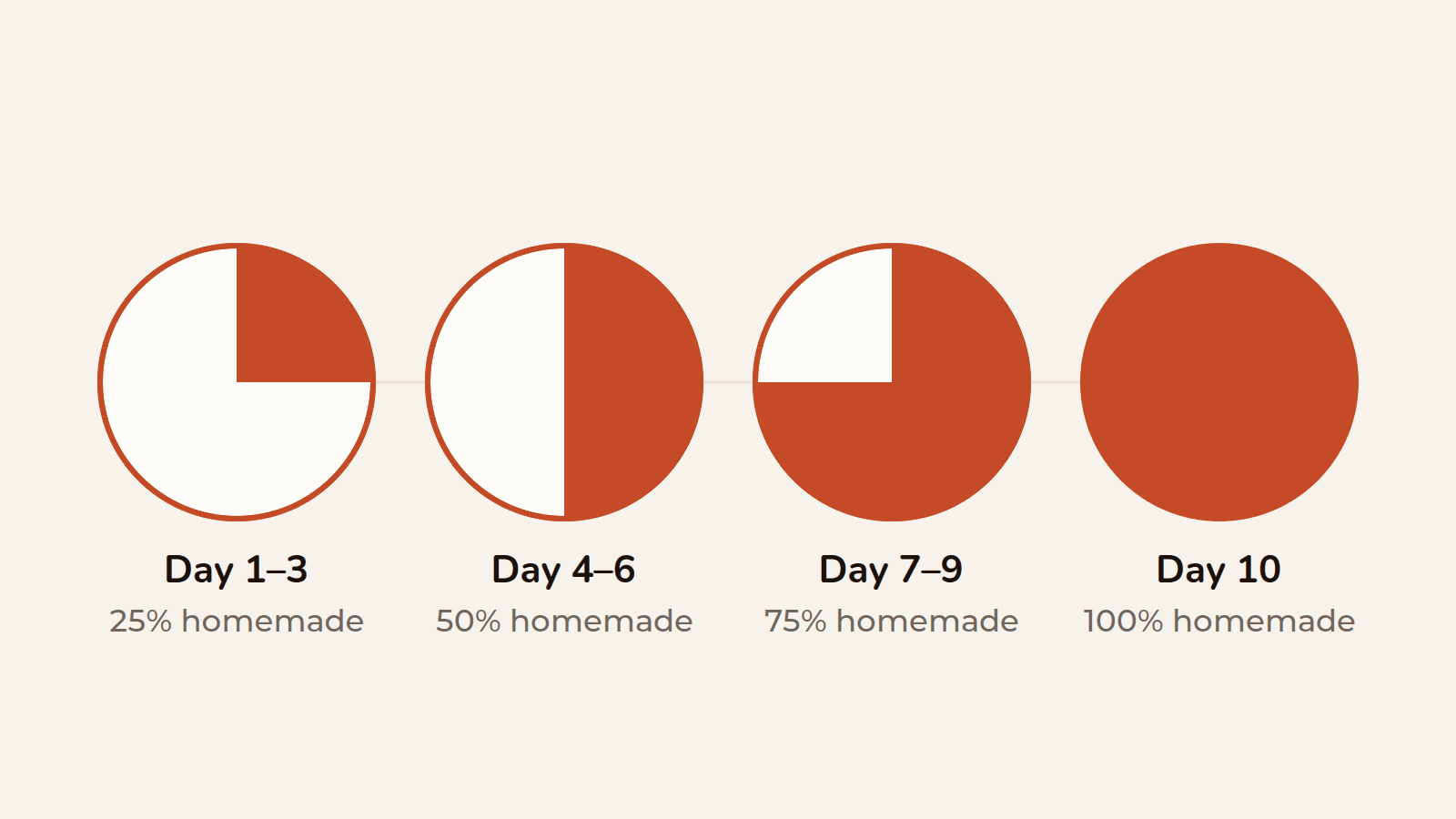
Mix both foods together in the bowl, not side by side. Side by side lets them eat around the new part without ever touching it.
What if my cat has a sensitive stomach?
Start smaller. A teaspoon or two mixed into their regular food is a fine place to begin. Increase every few days, and only move up when things have settled. A 21-day transition that goes smoothly beats a 10-day one that doesn't.
Slower is still winning.
What if they won't touch it at all?
Cats judge food by smell and texture before they ever taste it. Homemade is completely unfamiliar on both. Mix in a little of their favorite topper or treat so the new food comes attached to something they already love. Once they're eating the mix happily, ease the topper out over a few days.
Let your cat's litter box set the pace
Firm, consistent stools mean keep going. Loose stools mean slow down. Hold at the last amount until things settle, then move forward.
There's no timeline that works for every cat. The 10-day ladder is a guide, not a rule. Let them tell you.
One thing that surprises people
Once your cat is fully switched, they'll probably drink less water. That's a good sign. Homemade food holds so much more moisture than kibble. A properly prepared wet meal can hold 70 to 80% moisture, compared to roughly 10% in dry food.1 That means most of your cat's daily hydration is coming from their bowl. Less water in the dish doesn't mean they're dehydrated. It means the bowl is doing the work.
Find your cat's first homemade meal →
References
-
Association of American Feed Control Officials (AAFCO), Official Publication, moisture content ranges for canned and dry pet food. ↩

