
If you have ever cooked something fresh for your cat, set it down with a little pride, and watched them sniff it once and walk away, it is almost never your cat being dramatic. There are plenty of reasons a cat refuses a meal, but one of the most common is the liver, and more often than not it was simply cooked too long.
Liver is one of the most important ingredients in a homemade recipe and one of the easiest to ruin. It goes wrong in two ways: one your cat can smell, and one nobody can see at all.
The invisible problem: nutrient loss
Start here, because it is the one you should care about most. Liver is one of the most nutrient-dense things a cat can eat. It is among the richest sources of vitamin A and vitamin B12 there is, with a full bank of B vitamins behind them — folate and riboflavin in particular — plus taurine, which cats cannot make enough of on their own and must get from food to keep their eyes and heart healthy.1
The problem is that some of the most valuable of these nutrients are fragile, and heat is what breaks them down. Folate is the clearest example, one of the most heat-sensitive nutrients there is. A long, hard cook quietly destroys much of it. A meaningful share of the B12 goes the same way.
None of it announces itself. Once the heat has taken those nutrients, there is no putting them back.
The visible problem: what your cat is reacting to
Overcooked liver turns rubbery and grainy and develops a strong, slightly metallic smell as the proteins seize up. To you that might read as a little much. To a cat, whose nose runs circles around ours, it reads as inedible.
That sniff and turn away is them telling you the liver went too far.
The fix: one simple technique, both problems solved
The good news is that one method avoids both problems at once. We never cook liver on its own at a hard boil. Instead:
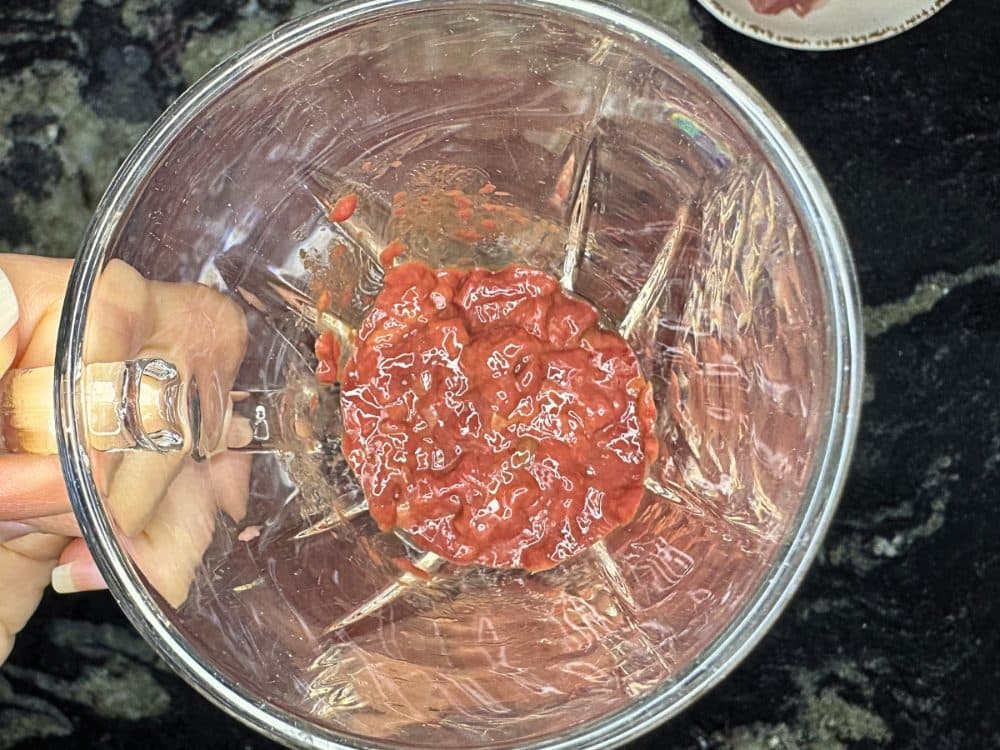
- Snip the liver into small pieces directly into a cup using kitchen scissors.
- Cook the rest of the recipe as normal, then take the pot off the heat.
- Let everything come down to around 170°F (77°C), then add the liver pieces.
- Let the residual heat do the work. Small pieces reach a safe temperature almost instantly.
That is the whole trick, and it is the difference between a bowl your cat ignores and a bowl they finish. Every feeding plan on our site is built around treating liver exactly this way, with the temperatures and steps laid out so you never have to guess.
Find your cat's first homemade meal →
References
-
Hayes, K.C., Carey, R.E., & Schmidt, S.Y. (1975). Retinal degeneration associated with taurine deficiency in the cat. Science, 188(4191), 949–951. PMID 1138364. ↩

